Decode the VIN. Know what to verify before you buy.
Run a live VIN identity decode now, then use source-labeled guides and the original ClearVIN sample to understand what a full history report can cover.
One VIN. The questions that can change the deal.
Explore each risk category with plain-English definitions, coverage states and limits — before you rely on a result.
Stolen Vehicle Check
Learn how VIN-based theft and recovery searches work, which sources consumers can check, and what a non-match cannot prove.
Understand this check 02Salvage Title Check
Learn how salvage, junk, rebuilt and related title signals can appear in covered records and which documents still need verification.
Understand this check 03Title Brand Check
Understand title brands such as rebuilt, flood, lemon, junk and odometer-related designations.
Understand this check 04Recall Check
Understand safety campaigns associated with a decoded vehicle and the difference between a campaign and a confirmed open recall.
Understand this check 05Accident History Check
Learn how covered collision and damage events can carry dates, severity clues and source context.
Understand this check 06Odometer Check
Learn how dated mileage records can reveal rollbacks, inconsistencies and unusual gaps.
Understand this check 07Flood Damage Check
Learn which title brands, total-loss signals and reported events can point to flood damage.
Understand this check 08Lemon Title Check
Learn how manufacturer buybacks and lemon-law related brands can appear in covered title records.
Understand this check 09Vehicle Lien Check
Understand lien signals and the documentation needed before ownership changes hands.
Understand this check 10Total Loss Check
Learn how covered total-loss, salvage and severe-damage signals can affect price and inspection priorities.
Understand this checkVIN · make · model · build
Title · mileage · damage · sales
Structure · repairs · current condition
A useful report should show its work.
The goal is not another wall of records. It is a clear path from vehicle identity to the questions you should ask next.
- 01
Decode the vehicle
Confirm the year, make, model, trim, engine and assembly details encoded in the VIN.
- 02
Separate records by category
Title, damage, mileage, theft and recall information each get their own coverage and source state.
- 03
Turn signals into next steps
See what looks consistent, what needs proof and what an inspector should examine before money changes hands.
See the signal. See the source. See the limitation.
A report should make uncertainty easier to understand — not hide it behind a green badge.
RAV4 XLE AWD
2T3P1RFV•MC••••••The illustrative record is broadly consistent, with one moderate rear-impact event worth inspecting before purchase.
This summary organizes visible signals. It is never a substitute for document review or an independent inspection.
Start with a VIN. Know what to check next.
Useful vehicle research begins with identity, then adds the specific evidence your decision needs.
How to Decode a 17-Character VIN
Learn what each VIN position means, then preview the vehicle identity and explore the planned history-report format.
Open toolVehicle Market Value Factors by VIN
Understand how mileage, location, trim, condition and history can shape a realistic price range.
Open guideWhere is my VIN?
Find the number on the windshield, door jamb or documents.
Open toolSample report
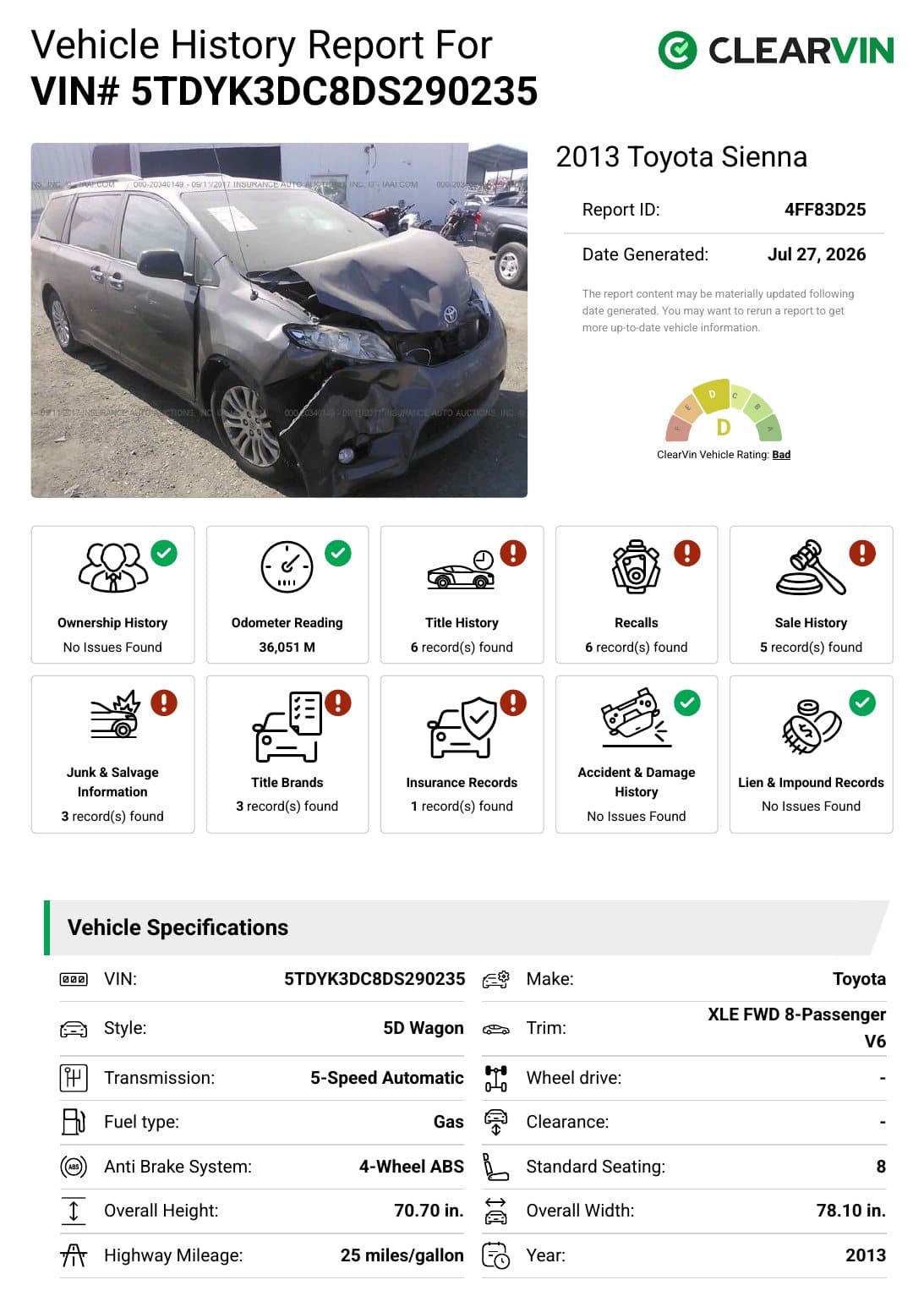
Explore how records, sources and limitations fit together.
Open tool1HGCM826•3A••••••VIN plateYour VIN is closer than you think.
Modern U.S. VINs contain 17 letters and numbers. The fastest place to look is through the lower driver-side windshield.
DashboardLook through the windshield from outside.
Driver-door jambCheck the certification label near the latch.
Vehicle documentsUse the title, registration or insurance card.
Questions buyers ask before they trust a VIN report.
The short answer comes first. The limits stay visible.
Coverage is part of the answer.A missing result and a clean result are not the same thing.
The identity preview can show the vehicle year, make, model and selected factory details when those fields are available from the decoding source. The sample report explains how separate history categories and coverage states should be presented.
A decode reads factory identity encoded in the VIN. A history report adds records created later, such as title brands, damage, odometer readings, ownership events and recalls when the relevant source covers them.
No. Unreported repairs and events can be missing from every database. Use a history report to reduce uncertainty, then verify the title and arrange an independent pre-purchase inspection.
No. Vehicle-history results should show non-personal event information such as dates, states, use types and transfer counts only when law and source agreements allow it.
A “no record returned” result is meaningful only when the source actually covers that category, place and time. We separate no record, not covered and unavailable states so missing data is not presented as a clean history.
The next car deserves more than a guess.
Decode the VIN now, confirm the physical vehicle and decide what evidence deserves a closer look.